
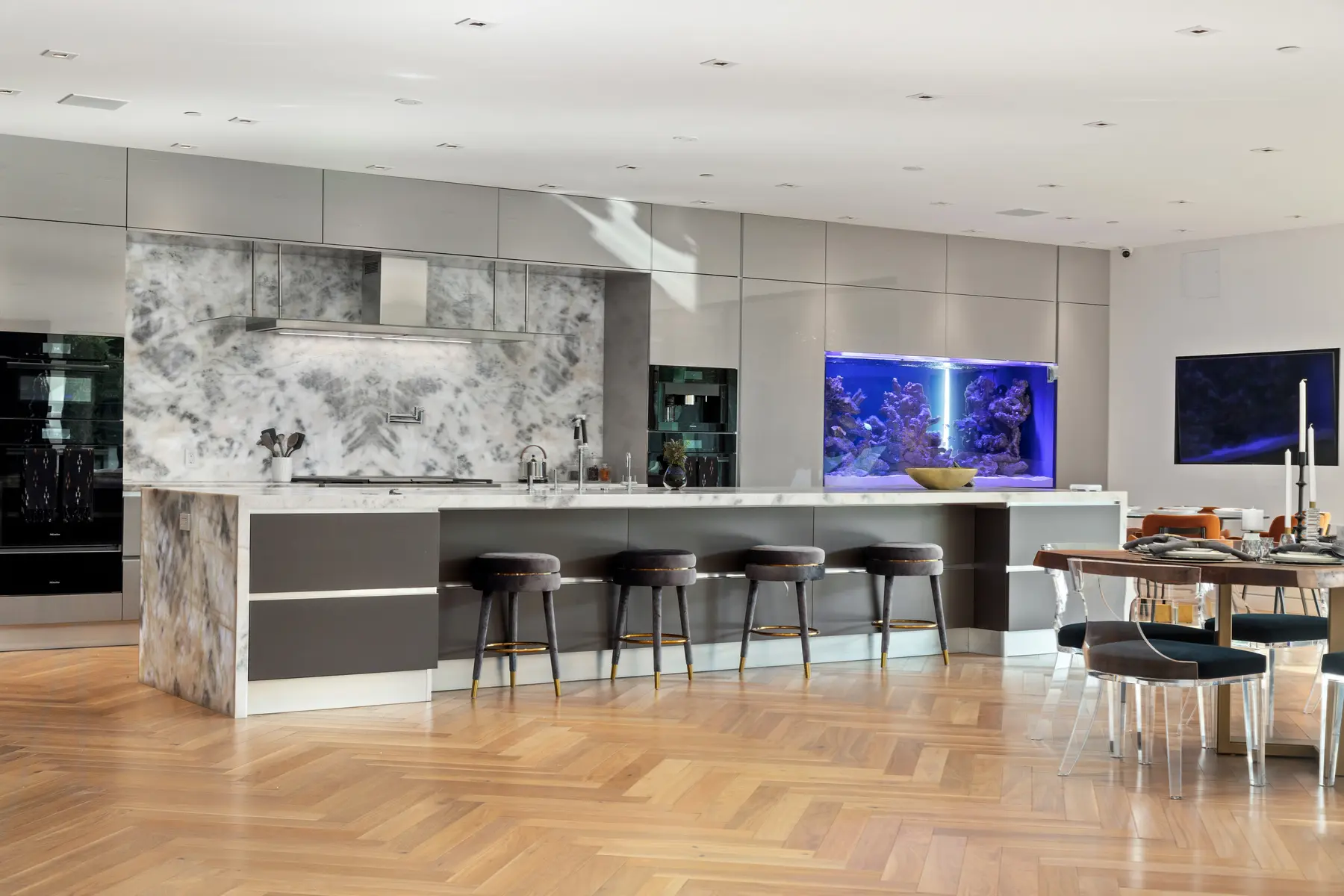
Stone selection
Slabs chosen in person, with veining and color variation read closely, and each slab planned for how it is cut, matched and joined.
Interior Design · Material + Color
Apel Design selects and composes interior materials and color for homes in Malibu, Los Angeles and Southern California: stone, wood, plaster, metal and tile, tested as samples and mockups before a surface is ordered.
The idea
Most rooms fail on material before they fail on plan. A stone that looked warm in a showroom turns green under a north window, a wood that matched its sample darkens within a year, and a white paint reads blue beside marble. The studio treats material and color as design work with its own drawings and tests, so every surface is chosen for its light, its use and its neighbors.
A palette usually starts from one material with real presence, often a slab with strong movement, and the rest of the room is composed to let it lead. Wood, plaster and metal are held to a narrower range so they support it instead of competing. Color comes last and mostly from the materials themselves, which is why a room can feel calm even where one surface is loud.
Knowledge + experience
Six kinds of knowledge behind every material and color decision.
Slabs chosen in person, with veining and color variation read closely, and each slab planned for how it is cut, matched and joined.
Species, cut and finish chosen for tone and wear, with stain samples judged in the room's own light rather than a showroom's.
Troweled plaster and sculpted relief walls that give a white room depth and shadow without adding another color.
Brass, black and stainless finishes coordinated across fixtures, pulls and lighting, including how each one darkens or holds its surface.
Dimensional, stacked and large-format tile set out on drawings, so pattern, scale and joints land where the eye expects them.
Paint colors tested against the actual materials, and a palette planned for how the stone, wood and metal will look in ten years.
Selected work
Kitchens, baths and quieter rooms where one material sets the tone.
The path
A short palette of stone, wood, metal and color, drawn from the architecture, the light and how each room is used.
Physical samples gathered and viewed together in the house at different hours, because color shifts between daylight and lamplight.
Larger mockups test the decisions that matter most: a slab layout, a plaster finish, a stain on the actual wood.
The studio reviews shop drawings and finished surfaces against the approved samples, and flags any substitution before it reaches the room.
Design-Build interiors
Rooms from Maliview, The Aviator and Mintcello, where the studio carried its own design through Design-Build, with construction by Creative New Dimensions Inc, in conjunction with Apel Design for Design-Build.
Questions
We start from the room's light and its other materials, then select slabs in person, because veining and color vary from slab to slab. Each slab is laid out on a drawing so its strongest movement lands where it will be seen, such as a backsplash or a shower wall, and the joins fall where they are least noticed.
Yes, and the palette is planned for it. Oiled woods deepen, unlacquered brass darkens and honed stone softens with use, while sealed and lacquered surfaces change very little. We explain which surfaces will age and how, so the choice between a living finish and a stable one is made on purpose, room by room.
Often that is the best place to start. A red wall, a dark tile or a heavily veined slab can anchor a whole room when everything around it keeps to a quieter range. We test the strong element first, with samples in the space, then tune the surrounding wood, plaster and metal to it.
Yes. Apel Design can lead an interior from the first sketch to the final placement, whether the house is delivered through our Design-Build practice or built by a contractor of the client's choosing, with the studio overseeing the interior work. On a Design-Build project, construction is by Creative New Dimensions Inc, in conjunction with Apel Design for Design-Build.
Or ask one question, or call (310) 317-0500.